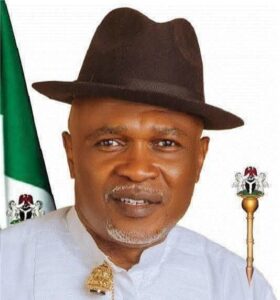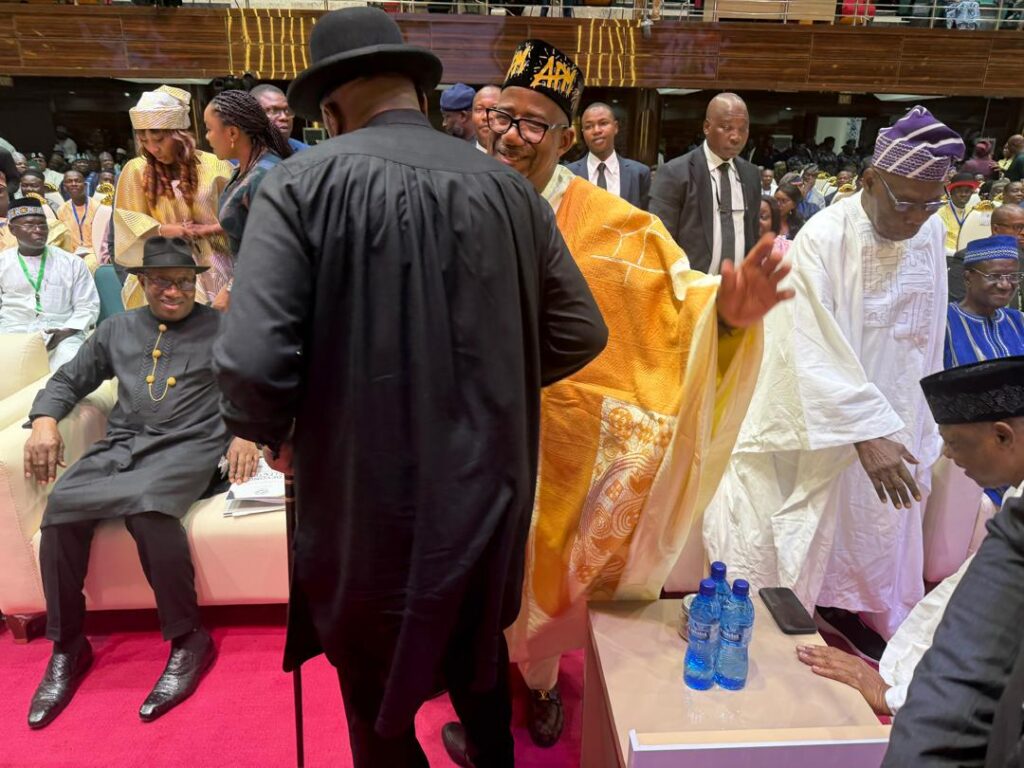
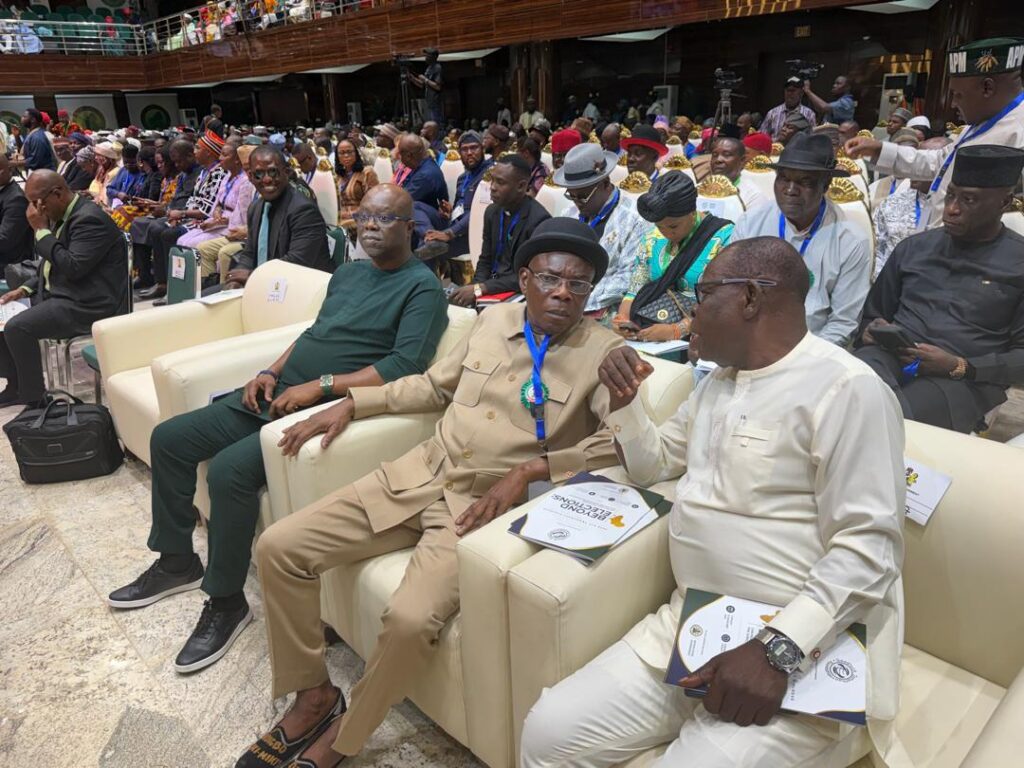
Bayelsa State governor, Senator Douye Diri, has spoken of the need for Nigeria to urgently correct what he calls the structural imbalances in the country. The imbalances, according to him, includes the practice fiscal federalism and obedience to the rule of law.
Delivering a goodwill message at the 2026 Goodluck Jonathan Foundation Democracy Dialogue at the International Conference Centre, Bauchi, on Tuesday, Diri also identified the absence of justice, equity and fairness as the three pillars responsible for Nigeria’s tottering democracy.
The governor cited Bayelsa as case study, saying the injustice in resource exploitation, particularly crude oil, and the attendant lopsidedness in national revenue distribution had continued for decades.
He stated that oil-bearing areas in the state and the Niger Delta still lacked commensurate development more than 60 years after oil exploration began despite generating so much revenue for the country.
Diri equally faulted a situation where the state with only eight local government areas had revenue from its resources shared in Abuja to states without oil but had more local governments.
According to him, there was also a relationship between resource exploitation and insecurity in the country, noting that the mining of gold in some states in the north had been followed by heightened insecurity in those states.
He commended the former, Dr Goodluck Jonathan and his foundation for organising and sustaining the annual dialogue, saying the country required such platforms to jaw-jaw in order to develop a truly democratic culture.
His words: “We are gathered here again today because of this annual discourse, which I recall had also been held in Bayelsa State when our leader started moving it to the states.
“The topic is about democracy and I like to bring it home to Bayelsa State. Democracy has been well-defined by former President Olusegun Obasanjo, and it is about the rule of law.
“To my mind, democracy is built on three pillars – justice, equity, and fairness. And I believe that we missed the road of democracy in Nigeria long ago because there is no justice. There is injustice where Oloibiri, the oil community in Bayelsa that made Nigeria a commercial oil producing country, remains a shadow of itself.
“It is ironical that at the end of every month, all our states go to Abuja to share oil money. I do not think that is what democracy is all about. For instance, Southern Ijaw, an oil-rich local government area in my state that brings so much money to Nigeria, had no road access for more than 60 years until I invited former President Obasanjo, who graciously came to inaugurate a project there.
“This local government also had no access to its headquarters until recently that my administration constructed a 630-meter bridge across a river to the place.
“Also, to my mind, there is total injustice where my state has just eight local government areas. Some other states have 40 or more. But, the resources from my state are shared to those local government areas from my eight. No matter who becomes president, this injustice and unfairness continue. Resources are being expropriated.
“Today, there is gold in Zamfara and other northern states. And what do we experience? Insecurity. Most of the insecurity has been traced to the discovery of gold in that far north.
“So, my dear leaders, my conclusion is that for democracy to thrive in Nigeria, there must be true federalism. Until we begin to practice federalism, we will have some pseudo-democratic, pseudo-autocratic, and sometimes even a tyrannical government in this country.
“However, I congratulate my elder brother and our former president, who has made this dialogue possible, and we must continue to jaw-jaw, so that at the end of the day the country will be better for us all.”
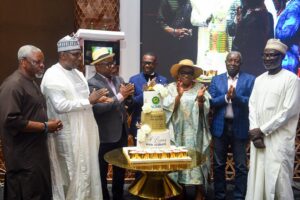
The event, with the theme: “Beyond Elections: Can Political Parties and the Judiciary Save African Democracy?” was held in collaboration with the Bauchi State government and chaired by Obasanjo.