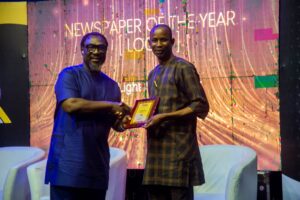
The National Chairman of the Nigerian Institution of Marine Engineers and Naval Architects, NIMENA, Dr Sylvanus Eferebo, has proffered solutions to the lingering boat mishap and poor boat maintenance in Nigeria, pledging stronger advocacy for national maritime policy framework.
NIMENA boss stated this in an interview during the 2025 Annual Conference in Port Harcourt, where he also expressed concern over Nigeria’s marine safety challenges.
Excepts:
Is it appropriate for the conference to emphasize Nigeria’s digital transformation in the marine sector when everyday marine and maritime communities still struggle with rickety vessels, overloading, poor maintenance, frequent accidents, and polluted waterways?
As an institution, we are policy advocates but we do not enforce and help in shipping policy to help the government. Now, every year, we choose one relevant one topic. We must also know that maritime is a global phenomenon, not just about Nigeria. So, Nigeria cannot afford to sit and watch while other nations are looking ahead. We have to be updated in line with global trend.
Last year, we discussed policy and regulation. This time, we are talking about digital transformation because we want smart processes and solution in terms of addressing our problems. Even this challenges you mentioned will benefit from smart solution; boat mishaps, marine incidents, they all are caused by lack of solutions. This conference boils down to policies, digital transformation can be applied in policy reforms. We have different subtopics especially how we can be sovereign in having our own solutions. These are the structured pathways that we are looking at. Conferences like are to collaborate and engage. All of this will serve as advisory note. We come up with communique that can be used to form policy. We have industry experts, policy makers, the academia, every group; a complete ecosystem.
Is there any evidence that these yearly conferences yield any policy change or anything that helps change the industry for good?
Yes, part of the recommendations that we rolled out in previous years are what have informed the current engineering regulations. In fact, critical members of this institution are part of drafting the regulations we talk about. I personally am the chairman of COREN ERM&E (that is Council of Registered Engineers of Nigeria, Engineering, Regulation, Monitoring and Enforcement) committee. I was also part of principal members of the institution. We are also part of the people that reviewed the COREN regulations that have just been gazeted for marine engineers and marine architecture. We cannot be separated from the regulatory bodies.
How can the waters even be clean to allow some of the things you are calling for?
Just as one of our presenters, Jandni Jaja, a Singaporean, said, we need to have a clear national vision for maritime. When we have that, we now get a structured roadmap or pathway to having a sustainable blue economy, we will now define steps to take. It will form one single national maritime vision.
She has made it clear that Nigeria has the potential to lead Africa maritime. We have huge assets in the blue economy; long coastline, highest oil and gas activities happening over a vast area, teeming youths that are resilient and brilliant enough to create solutions. Nigeria has to create a pathway to advance our blue economy.
As it is now, we have different agencies doing their own things. We must come together to forge one national vision, one pathway.
Singapore’s national asset is the sea. So, they now forge a national vision that surrounds the sea and everybody works toward this vision. Until we create ours, we won’t move forward.
Who should drive this process to arrive at a vision and pathway?
NIMENA has come out from the professional angle to form this advocacy. You cannot talk about sustainability without engineering infrastructure. So, that is the reason why as the foremost institution, we have come to up for this. For over two years, we have talked about the blue economy and one of our members has been appointed as special adviser to a governor (Ondo State). We are doing our best to see how we can work within the scope of our jurisdiction. Now, we need to have a national discuss and chart a national roadmap for the advancement of the blue economy.
One of the principal things is that NIMENA is also a part of the Nigerian Society of Engineers (NSE). In the larger of the NSE, we have a voice. We are having a national conference in Ibadan (Oyo State) next week and I am a speaker there. Theme is Engineering Innovation for Sustainable Blue Economy. It is attracting world leaders, national leaders, etc. We expect that at the end of this discuss, we will be able to take what we have resolved to national advisory note for policy makers to do their work.
The good thing about professional conferences like is that we go deep into technical aspects and that is what we are doing here. We may not have that depth in the general one, but at the end of the day, as a division, we will link up and come up with a robust policy framework. As Jangdi said, the key issue is not technology but policy and efficient regulation.
Where does the Minister or President come in as driver of the transformation we seek?
The President has done well by creating a Ministry of Marine and Blue Economy. That Ministry has a lot of responsibilities, though a baby ministry. They are one of the key sponsors of the NSE Conference of next week. These conversations are going on.
Are you saying there is hope in the Blue Economy?
Very big hope. There is hope and it is happening.