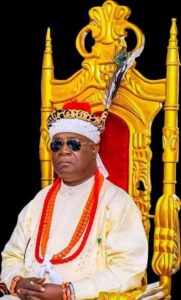
Onyeche Wofurum Igwe
Nigerians have continued to bicker over last week’s shut down of the Port Harcourt Refinery, with the Nigeria Labour Congress (NLC), Civil Society Organisations (CSOs), and industry experts querying the action.
According to reports, the refinery stopped working in mid-December 2024, less than a month after it resumed production. A visit to the facility revealed that the 18-arm loading bay was empty, and petrol lifting had come to a halt. This development has raised concerns about the reliability and sustainability of the refinery’s operations.
The refinery’s reopening was initially celebrated with much fanfare on November 26, 2024, when the former CEO of the Nigerian National Petroleum Company Limited (NNPCL), Mele Kyari, inaugurated the 60,000 barrel per day production capacity plant.
However, the latest shutdown has cast doubts on the refinery’s ability to operate smoothly.

Industry experts and legal scholars have questioned the transparency of the refineries’ operations, citing the frequent shutdowns as evidence of deeper issues. They are calling for greater accountability and transparency in the management of the nation’s oil facilities.
The shutdown of the Port Harcourt Refinery has significant implications for the nation’s economy and the general public. As the calls for accountability grow louder, it remains to be seen how the NNPCL will respond to these concerns and address the underlying issues affecting the refinery’s operations.
Taiwo Ogunloye, an energy expert and lawyer with technical knowledge of the industry told our correspondent that the failure of the Nigerian Midstream and Downstream Petroleum Regulatory Authority (NMDPRA) to provide a technical audit report on the status of the public refineries had led to anxieties about transparency in the management of the refineries.
Ogunloye said Section 32 of the Petroleum Industry Act (PIA) empowered the agency to audit refineries and issue operator guidelines and standards.
He said that the regulator’s failure to intervene placed a significant burden on the NNPCL, as the public is not aware of the current status of those refineries.
He also expressed concern at the non disclosure of the real reason for the shutdown of an asset that had gulped huge public funds.
“I think it’s proper for the NNPCL to make public the issues with the refineries and specifically indicate the areas affected so that people can forecast and assess the level of competence in the refineries’ management,” he added.
Spokesman of the Crude Oil Refinery Owners Association of Nigeria (CORAN), Eche Idoko, similarly decried the lack of transparency, saying the public is unaware of the refinery’s state.
Idoko called for a review of public funds channelled into rehabilitating the NNPCL refinery.
According to him, despite such government interventions, products from the company’s refineries are more expensive than those from the Dangote Refinery.
He said that CORAN had always advocated a level playing field for all operators and called on government to extend funds to other private refinery operators to create a balanced market structure.
For his part, Henry Adigun, a public affairs analyst and energy expert, said that the routine maintenance announced by the NNPCL should not be seen as unusual.
In the argument, Adigun said that the refinery has been down for an extended period and that it is expected that after the rehabilitation, the test run would identify potential problems, which would be resolved as they occur.
“We should realise that the plant is old and not newly built, and as such, technical hitches should be expected and rectified as they emerge,” he noted.
TNN reports that the NNPCL announced the shutdown of the Port Harcourt refinery for maintenance starting May 24.
According to the company’s Chief Corporate Communications Officer, Femi Shoneye, the refinery will undergo a maintenance shutdown. He said the exercise would take a month and that the company is working with relevant stakeholders to ensure efficiency and transparency.
“We are working closely with all relevant stakeholders, including the Nigerian Midstream and Downstream Petroleum Regulatory Authority, to ensure the maintenance and assessment activities are carried out efficiently and transparently,” he said.
Nigerians were jolted at the announcement of the refinery’s resumption late last year. The refinery, with 60,000 barrels per day capacity, operated at 70 per cent installed capacity. The restart marked a significant step toward reducing Nigeria’s reliance on imported refined petroleum products.
The refinery underwent a $1.5 billion rehabilitation project approved by the Nigerian government in 2021.
The refinery’s daily output includes 1.4 million litres of petrol, 1.5 million litres of diesel, 2.1 million litres of heavy fuel oil, 900,000 litres of kerosene, and unspecified volumes of LPG.
The restart is a significant step towards Nigeria’s energy independence and economic growth.
The assistant general secretary, Nigeria Labour Congress (NLC), Comrade Chris Onyeka, said the NNPC cannot shut down what was not operational.
He said, “The government is taking Nigerians for granted; they are not sincere, and we believe they are deliberately sabotaging themselves. Or how can they tell us that the Port Harcourt refinery is working, coupled with that of Dangote, yet we are still importing, yet we are still talking of landing cost? How can Nigerians be paying high fuel costs if the PH Refinery is truly working? Does it mean Nigerians are consuming more fuel?
“We are just watching because we know what they are doing. It is just like telling us that the army has defeated Boko Haram, a number of them have been killed but they will not show the public the bodies of those killed.”
Onyeka recalled that government had said the PH was technically completed and operating.
“What is the meaning of technically completed? Shouldn’t the price of fuel, etc, drop drastically if truly the PH refinery is working along with that of Dangote?
“Let them keep fooling themselves; we are only waiting for the appropriate time to talk,” he said.
Civil Society Organisations (CSOs) have called for the NNPCL to account for the money spent on the turnaround of the Port Harcourt refinery.
Reacting to the controversy surrounding the shutdown of the Port Harcourt refinery, the head of Transparency International (TI), the Civil Society Legislative Advocacy Centre (CISLAC), and the Transition Monitoring Group (TMG), Awwal Musa Rafsanjani, condemned the action and called for accountability from the public officials and contractors who had worked on the facility’s repairs.
Rafsanjani, while attributing the whole issue to corruption, insisted that those involved in the earlier repairs of the refinery accounted for the money made available to that effect.
He further said Nigerians must be told what happened and the money must be returned; any attempt not to return the funds will be tantamount to a waste of time and dubious reforms, even if the new management of NNPCL intends to carry it out.
“What Nigeria is facing today is the collapse of responsible governance and patriotism by public officials. Everything is about the acquisition of public funds. It’s not about service. Otherwise, you can’t understand why, since the regime of Obasanjo, we have been spending money in the name of turnaround maintenance on these refineries that appear to be completely dormant.
“Port Harcourt, Warri, Kaduna…we keep spending money on maintenance. Billions have been spent without any commensurate repairs or upgrades to these facilities. That is to tell you that public officials are only interested in siphoning taxpayers’ money; they are not interested in service delivery.
He noted that the absence of accountability and responsible governance in the country has continued to hamper progress in terms of economic development, especially the oil and gas sector.
“Now that they close down this refinery, it is just to tell you how shameful or insincere and how corruption has taken the centre stage in our country.
“We condemn this act; after spending huge public taxpayers’ money, you close it down, so could you explain to Nigerians what happened to the money spent on the refinery? Was it that the money was not properly utilised, or what happened, and where’s the money? Are they going to refund the money because of the poor treatment that was done? There must be an explanation for Nigerians.
“So, the contractors and the public officials who worked on these refinery repairs must account for this money. They must tell Nigerians what happened, and they must return the money.’’
According to him, if the new GCEO (of NNPC) does not pursue the money, then any reforms he brings are a waste of time and dubious.
“We need to get this explanation and money returned. We can’t allow people to be siphoning billions in the name of turnaround maintenance, and nothing is repaired,” Rafsanjani added.