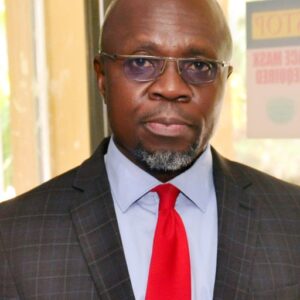
The feeling was mixed. On one side, I was ecstatic, and on the other side, I was wondering about the sincerity of the celebrations of their victory. These were about Mayor Jason Utitofon Jackson, an illustrious son of Ika in Akwa Ibom State, who became the first Nigerian to occupy the office of Mayor of Islington and 29-year old Opeyemi Bright, another Nigerian, who was sworn in as the civic mayor of Barking and Dagenham and became UK’s youngest mayor. The mixed feeling is the focus of this reflection.

Do you know that integrity means standing up for what you believe, even if it means standing alone? Why did many Nigerians celebrate (or at least pretend to celebrate) Jackson’s election? Why are what we claim to stand for, believe, and advocate at par with what we accolade, sometimes? While the news of Nigerians being elected majors in far away UK was a great reminder on the potentials in an average Nigerian and the ability to stand out and make positive differences in any part of the world, some of the congregatory messages and celebrations were sad reminders that some of us like what we do not like, don’t stand for what we profess, or, at best, only stand for it when it favours us.
As the governor of Akwa Ibom State reportedly said, “Councillor Jason Jackson’s emergence as Mayor is a great source of pride to the Government and people of Akwa Ibom State… His story is an inspiring reflection of hard work, integrity, and service – values we strongly uphold as a people.” President Tinubu reportedly commended them for consistently promoting the values of honesty, integrity, hard work, and commitment to the well-being of others.
Many others shared similar messages. However, how do we claim to commit to hard work, integrity, and service as considerations for leadership and at the same time pledge allegiance to leadership selection process based on “Emi lokan,” ethnicity, zoning, religious sentiments, godfatherism, political patronage, and the likes? How do we celebrate Jackson’s history without our conscience pricking us? For instance, irrespective of his or her qualities, how many local government areas in Nigeria can someone even be considered eligible to contest for councillorship if he or she is not born and bred there, with evidence that his or her father and mother are from the local government and elders that can point to his or her late grandparents’ graves and great grandparents’ memorial stones? It seems the world has moved while we continue to hold onto what doesn’t bring greater good on the premise that our democracy – is that even the right name for the type of government in Nigeria? – is nascent.
So, let’s rethink the Nigerian political leadership selection process. As much as it pleases, we have experimented with leadership by zoning, political patronage, godfatherism, religious sentiments, and the likes, for years, and yet still seem “cursed” amidst our blessedness. Let the election of Jackson and Bright be a lesson to us. Let’s revert to leadership by competence, honesty, integrity, hard work, and service. The good news is that none of these qualities recognizes ethnic boundaries, political affiliations, or religious sentiments. As much as it may be alien to us, the fact remains that a competent leader doesn’t necessarily need to come from your zone or mine to make positive impacts on lives and the society. As the governor of Akwa Ibom reportedly said of Jackson, “We are confident that his leadership will continue to promote equity, innovation, and inclusion, while also serving as a source of motivation to young people across Akwa Ibom and the African diaspora to dream, aspire and achieve.” In the same spirit that we celebrate Jackson and Bright, let’s domesticate a similar process that brought them to power. However, if you believe Nigerian political leadership selection should continue to be based mostly on tribe, religion, and political patronage, please don’t be part of the hypocrisy of celebrating what you’re not committed to. Like what you like and don’t like what you don’t like.
As you step out, say NO to leadership selection based on where someone comes from, who he or she knows, and who or what he or she worships. Let’s drive our political deliverance through commitment to integrity, honesty, hard work, and services to humanity. Irrespective of which side of the divide you stand, remember not to like what you don’t like or hypocritically celebrate the occurrence of what you cannot allow to happen.
__
Prof. (Engr.) Esang Esitikot is a professor of occupational health and safety, a COREN-registed chemical engineer, public affairs analyst, UN Ambassador for Peace, certified management consultant, World Safety Organization Ambassador, recognized Environmental Ambassador, marriage counsellor, youth mentor, reviewer for some international research journals and volunteer lecturer at the Institute of Health, Safety, Security and Environment, University of Uyo. He is a manager in the oil and gas industry and was recognized by Highstone Global University, USA as the occupational health and safety personality of 2024. He can be contacted via 08035103559 (Whatsapp only) or email (esitikot@gmail.com).