Ruth NWORIE

Governor of Bayelsa State, Senator Douye Diri, has said his decision to defect from the Peoples Democratic Party (PDP) to the All Progressives Congress (APC) was guided by personal conviction and the overall interest of the state.
Diri, who announced his resignation from the PDP on October 15, 2025, was formally received into the APC by party leaders, including Vice President Kashim Shettima, in Yenagoa on November 3, 2025.
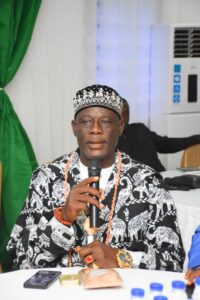
The governor spoke on Monday night at the January edition of the monthly Praise Night held at the Government House, Yenagoa, where he described politics as dynamic and urged politicians to embrace change when necessary.
In a statement issued on Tuesday by his Chief Press Secretary, Mr. Daniel Alabrah, Diri was quoted as saying there was nothing static about politics, noting that alignments and realignments were inevitable.
According to him, the development and progress of Bayelsa State remained the primary motivation for his political decisions.
“I do not take decisions lightly. I consult, I pray, and my spirit directs me on where to go,” the governor said.
He traced his political journey through different parties, including the National Solidarity Movement, the PDP and the Labour Party, explaining that movement across political platforms was sometimes necessary for growth.
Diri noted that his return to the PDP at the time eventually led to his emergence as governor, stressing that remaining in a party without progress could limit political destiny.
He, therefore, advised politicians to change political camps only when convinced, warning against blind loyalty.
“There is no static nature in politics. Movement is allowed, but it must be done out of conviction. Do not be a slave to anyone because destinies differ. The reason we are in politics is for the development and progress of our state,” he said.
The governor further asked political actors to reflect on the legacy they intended to leave behind, questioning whether future generations should inherit unity and development or division driven by personal interests.
Diri also said his administration was intensifying efforts to consolidate development projects to position the state above prevailing socio-economic challenges.
On infrastructure, he expressed optimism that the 630-metre Angiama Bridge across the River Nun in Southern Ijaw Local Government Area would be completed in the first quarter of the year.
He added that while the Nembe–Brass road project might not be completed within the year, work was progressing to a stage where travel to Brass by boat would take less than 20 minutes.
Speaking on power supply, the governor described the acquisition of the state’s 60-megawatt gas turbines as a first in the country, assuring that the government was committed to creating an enabling environment for economic growth.
Diri also appreciated members of the clergy, Bayelsans, security agencies and sympathisers from within and outside the state for their support during the burial of his late deputy, Senator Lawrence Ewhrudjakpo.
He reiterated that there was no rift between him and his late deputy following his defection to the APC, explaining that Ewhrudjakpo only approached the court without his knowledge due to fears of impeachment, an action he later apologised for and withdrew.
“Nobody could have impeached him if I did not approve it,” the governor said.
In his sermon, the General Overseer of the Royal House of Grace International Church, Apostle David Zilly-Aggrey, urged worshippers to acknowledge God’s love and power, commending the state government for sustaining the monthly praise night.
The cleric also prayed that the Prosperity Government would finish strong.