Just as it is contributing to the growth of Nigeria’s oil and gas sector, the Nigerian Content Development and Monitoring Board (NCDMB) is now fertilizing the nation’s steel and solid minerals sector for optimum growth.
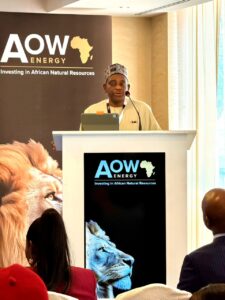
At the African Natural Resources and Energy Investment Summit in Abuja, executive secretary of the board, Felix Ogbe said the NCDMB was embarking in what he called a strategic intervention to buoy up activities in those sectors in Nigeria and in Africa generally.
Ogbe said the agency had spent more than a decade building domestic capacity, from certifying reserves in six states to mandating exclusive procurement from local processors through the Nigerian Content Equipment Certificate (NCEC).
According to him, barite importation for drilling became prohibited in Nigeria, not by accident, but through deliberate policy instruments, stakeholder partnerships, and enforcement frameworks.
Speaking through the board’s director of corporate services, Dr Abdulmalik Halilu, Ogbe said the interventions have boosted value retention, created jobs, and positioned Nigeria as a continental model for mineral-based industrialisation.
He said similar policies were being rolled out in the steel and pipe manufacturing sectors, including a 2022 directive requiring in-country sourcing of bare line pipes and oil tubular goods.
The reforms, he said, were reinforced by broader industrial support programmes such as the Nigerian Oil and Gas Industrial Parks (NOGAPS) and a $350 million Nigerian Content Intervention Fund managed in partnership with the Bank of Industry to scale up local manufacturing. To him, the clearest evidence of the reforms was visible in Nigeria’s expanding lithium and battery value chain.
“Local content is not a constraint; it is an enabler. When deployed intentionally, it becomes a lever for self-sufficiency, industrial growth, and economic sovereignty.”
Minister of Solid Minerals, Dr Dele Alake, who also spoke at the event said over $800 million in mining investments were secured in 2024 alone, following a major policy shift requiring all mining licences to include local processing plans.
The Nasarawa lithium battery plant, valued at $100 million, he said, was already up and running, while a $600 million lithium refinery near the Kaduna–Niger border was on the way.
He added that government revenue from mining surged from ₦6 billion in 2023 to ₦38 billion in 2024-a six-fold increase credited to tighter licensing, enforcement of value-addition rules, and new industrial investments.
“The shift is not just regulatory but economic. Indigenous Nigerian firms now contribute 15% of oil production and 60% of domestic gas supply. Engineering and fabrication companies such as Dormanlong, Saipem, and Aveon Offshore are executing complex projects previously handled by foreign multinationals.”
Beyond minerals and manufacturing, the NCDMB has also enforced local employment regulations through its partnership with COREN, ensuring that only certified Nigerian
engineers are deployed on projects. In tandem, a customs alert system now prevents the importation of goods — such as cables, paints, and valves — that are produced locally.
Also speaking at the summit, Nigeria’s Minister of Power, Adebayo Adelabu, emphasised that local content must be measurable. He highlighted reforms under the Electricity Act 2023, which decentralised electricity governance and enabled 11 states to begin managing their own power markets. He said the government is aligning its electrification drive with local manufacturing — including clean energy projects, meter assembly, and solar component production.
“The real value of local content lies in supply chains, technical jobs, and local ownership,” Adelabu said.
Kenya’s Minister of Mining and Blue Economy, Hassan Ali Jobbo, offered a cautionary note while urging African nations to define their own priorities in the minerals sector rather than simply adopting classifications imposed by others.
“Africa has talked too long about potential without decisive action,” he said. “We must decide for ourselves which minerals are critical to our future — not wait for outsiders to tell us.”