BY JOHN ODHE
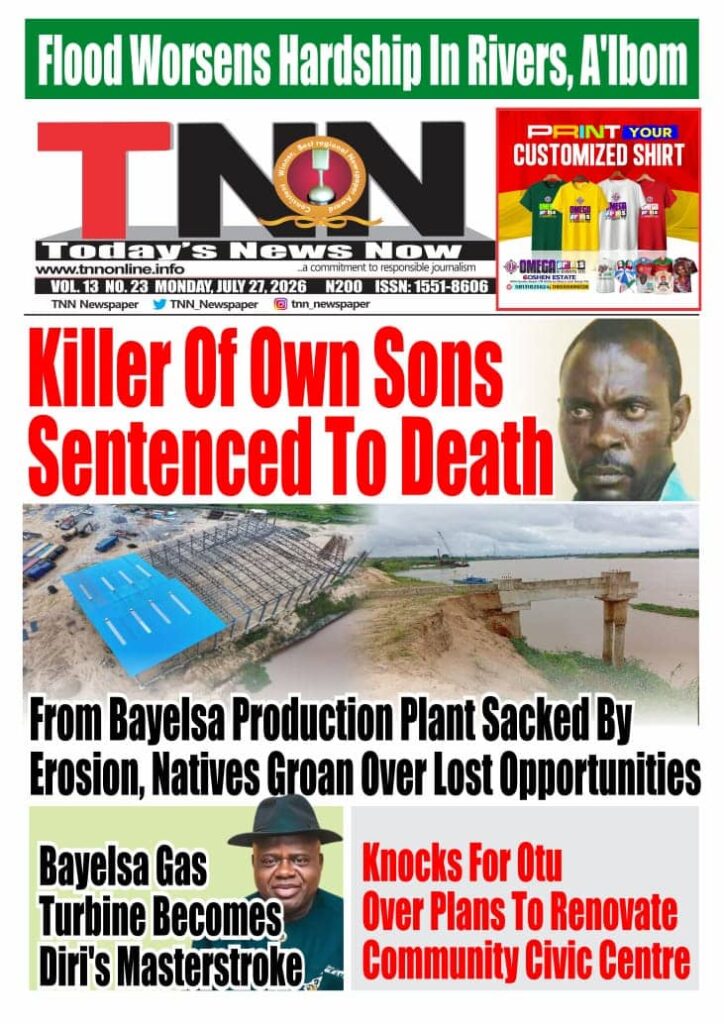
The 60-megawatt (MW) gas turbine power plant in Elebele, inaugurated by president Bola Ahmed Tinubu on April 10, 2026, anchors the Bayelsa Independent Power Plant initiative.
The aim of the project is to provide reliable electricity, lower operational overheads for medium-scale enterprises (SMEs), and drive local economic growth.
This, according to Yenagoa residents, is governor Douye Diri’s best economic policy that will leave his imprints on the sand of Bayelsa’s history books.
Powering Yenagoa, the State capital, the 60MW gas powered plant built at Elebele, Ogbia Local Government Area to bypass the unstable national grid, utilizes Bayelsa’s abundant natural gas reserves.
Spearheaded by the Douye Diri’s administration and managed alongside technical partners like the Bayelsa Electricity Company Limited (BECL), the project integrates local distribution networks to feed power directly into Yenagoa.
Test runs spanning key axes like Opolo and Amarata signal a strategic shift towards localized energy independence.
Economic Transformation And Local Business Relief: For years, medium-scale enterprises in Yenagoa, such as cold-room operators, printing presses, metal fabricators, and water-packaging factories suffered under the heavy financial weight of fueling diesel and petrol generators.
Unfortunately, during the years of dependency on purchase of fuel to run generators, some households lost their lives to fossil fuel fumes emitting from steaming generators while asleep in homes not well ventilated.
With many thanks to the Prosperity Government led by Senator Douye Diri, the advent of the gas turbine in Yenagoa has put an end to that ugly tale.
Reduced Overhead Costs: Stable output from the gas turbines directly slashes daily fossil fuel expenditures, expanding profit margins for small and medium enterprises.
Interestingly, expression of conviviality is now common on the faces of business men who before now laboured all day but went home with little or no profits due to the cost of running petrol or diesel powered generators.
“I almost closed down my business because of the high cost of fuel. But my mother asked me to be a bit patient, encouraging me that we would soon experience steady power supply. I was initially skeptical about the gas turbine.
“But today I am the happiest person in the whole of Yenagoa,” a hairdresser, Miss Rita Chidimma, said, describing governor Douye Diri as a “God-sent saviour.”
A welder along the Isaac Boro Expressway identified as Peter said “may God bless governor Douye Diri. The governor knows exactly what we want. The last contract I got to weld electric poles, it was fuel that consumed the whole thing.
“If it was now that the light has become steadier, l would have made a lot of profit. I am grateful to the governor for providing this gas turbine.”
Extended Operating Hours: Businesses are no longer bound by early generator shutdowns or erratic grid schedules, allowing for full-day production cycles and improved service delivery.
Job Creation: Lower baseline operational costs encourage new micro-industries to launch, creating fresh employment avenues for local youths.
Bayelsa youths, especially those residing in the State capital, are advised to take advantage of the significantly improved electricity to learn skills such as welding, fashion-designs, hairdressing and many more.
Having acquired skills, setting up small and medium scale business comes next as ladders to self realisation and future greatness.
Hurdles on the Path To Full Prosperity:
Despite the official commissioning of the power facility, full optimization remains a work in progress.
Local distribution bottlenecks, including damaged cables, faulty or vandalized transformers, and delayed feeder-line integration in outer neighborhoods, mean some residents still experience intermittent supply while awaiting comprehensive grid synchronization.
To those who are yet to experience the new lease of life in Yenagoa due to technical issues, it’s needless castigating the government. Relevant authorities have repeatedly assured of work in progress.
Resolving these final infrastructural gaps and finalizing transparent, affordable smart-metering tariffs remain crucial to unlocking the full economic dividends of the power project.