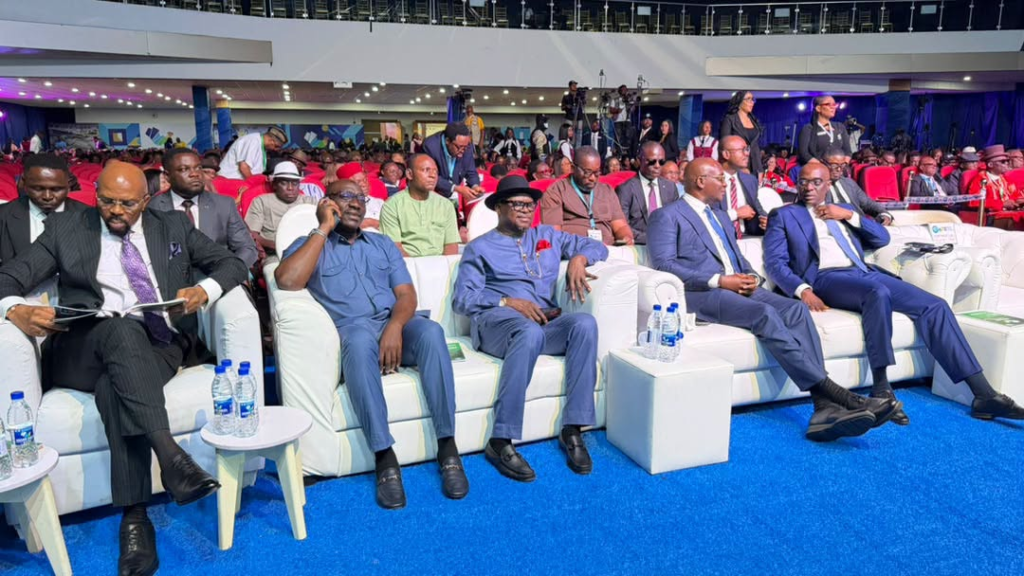
For The Records
…Being the speech delivered by the Managing Director/CEO of the Niger Delta Development Commission, Dr. Samuel Ogbuku, at the 2026 Niger Delta Economic & Investment Summit in Port Harcourt
Your Excellencies, distinguished ladies and gentlemen,
Please permit me to stand on the well-established protocol because I know we have representatives of governors here whose names I may not be able to call, representatives from the Presidency, and so many other dignitaries who are here to grace this occasion.
I want to say thank you for coming, and welcome you to the Niger Delta.
It gladdens my heart today to see all of us seated here to discuss the economy and investment potential of the Niger Delta.
This is a dream that we have all carried all these years, but the ability to converge and discuss it was the missing link.
With the establishment of the Niger Delta Chambers of Commerce, Industry, Trade, Mines and Agriculture, which was midwifed by the Niger Delta Development Commission as part of our vision to bring businesses, particularly small and medium-scale enterprises, together to grow the region for prosperity, this is a dream come true.
I want to thank the leadership of the Niger Delta Chamber of Commerce for driving this vision to where we are today.
It is one thing for you to have a vision, transmit that vision to a vessel, and for that vessel to be so proficient and efficient as to bring dignitaries to this same venue.
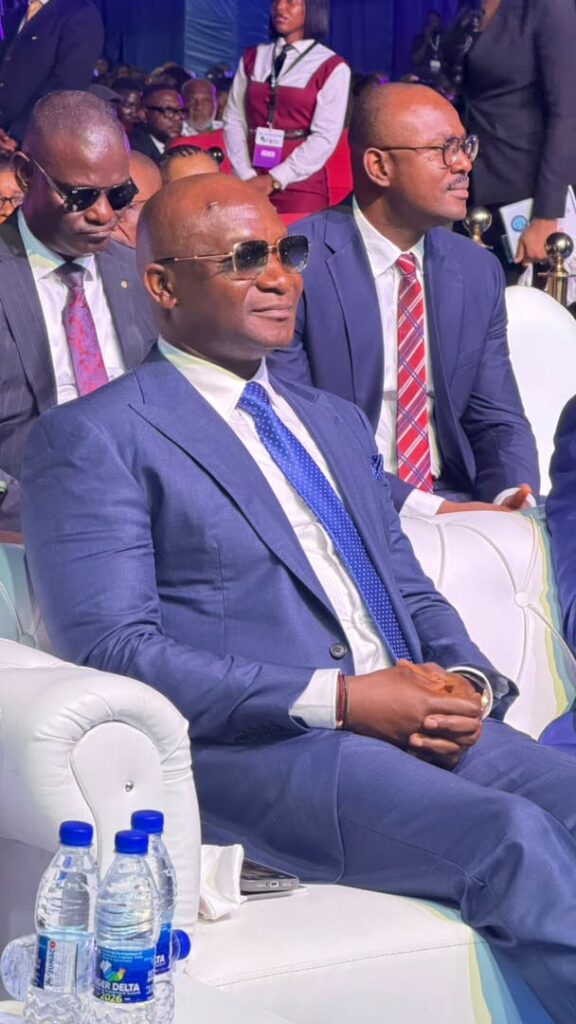
That is to say, with the dignitaries that I am seeing here, they have confidence in that vessel and confidence in that platform to have come together and converged here.
Ambassador Idaere Gogo Ogan, I want to say thank you. I think you are eminently qualified to sit in this position.
Coming to the Niger Delta Development Commission, you know, in the past, the Niger Delta Development Commission has supported small and medium-scale enterprises and people in agribusiness.
But we did not really see traction from what had been done so far.
Many people, even beneficiaries, would always assume that the NDDC did nothing to support the people.
But under this present administration, with the guidance from Mr. President and with a new vision, the Niger Delta Chamber of Commerce was conceived and midwifed to serve as a go-between for the Commission, other parastatals, and the people of the Niger Delta.
The Niger Delta Development Commission gave an initial seed fund of ₦5 billion to the Niger Delta Chamber of Commerce to support small and medium-scale enterprises.
But nobody came to our headquarters. No politician called us to say, “We have candidates,” because it was open to everybody.
If you have the capacity, go and access it, because it is money to be repaid and it is properly structured.
So it went to those who deserved it.
But in the past, it was all political. Everybody wrote lists.
So those who benefited from it did not even appreciate the value of what they had. They would rather use it for different purposes and not for the purpose for which they sought those loans.
So, under the new dispensation in NDDC, we do not have that direct connection with the people for this purpose.
If you need such support, you go to the Niger Delta Chamber of Commerce, and you must be a registered member of the Chamber of Commerce for you to benefit.
That is a platform we have created to bring everybody together.
Those who have the capacity can benefit from it, but those who do not have the capacity may complain.
But for this summit, this is an opportunity for us as a region to introspect on our economic challenges and our economic prospects.
If we ask ourselves, with our rich natural and mineral resources, economically, where are we at the moment?
In terms of investment, where are we at the moment?
At one time, this was the hub of oil and gas in Nigeria.
But today, oil and gas in Nigeria seems to be moving far away from us — far away to the deep offshore — and headquarters have moved to Lagos and Abuja, while the operational bases still remain with us.
Some of our governments are still grappling with the issue of tax payments from the IOCs, where IOCs will say that their offices are not domiciled where they operate.
But we must understand that, as much as this is history, it gives us an opportunity to reflect on where we are coming from and where we are today.
Are we going to continue on that route of chasing the oil companies to come back?
Or can we take advantage of what we have, develop it and develop the region?
We have spent so many years fighting IOCs, chasing them, taking them to court and making claims. But the years are going.
𝗧𝗵𝗲 𝗺𝗮𝗶𝗻 𝗿𝗲𝘀𝗼𝘂𝗿𝗰𝗲 𝗼𝗳 𝘁𝗵𝗲 𝗡𝗶𝗴𝗲𝗿 𝗗𝗲𝗹𝘁𝗮 𝗶𝘀 𝘁𝗵𝗲 𝗽𝗲𝗼𝗽𝗹𝗲.
We are strong. We are resourceful.
Let us look inward and use those resources to develop our region.
To prove this to you, you find that most of the bank MDs in Nigeria today are from this region.
Most owners of banks today in Nigeria are from this region.
That is to tell you that we have the resources.
𝗛𝘂𝗺𝗮𝗻 𝗿𝗲𝘀𝗼𝘂𝗿𝗰𝗲 𝗶𝘀 𝘁𝗵𝗲 𝗺𝗼𝘀𝘁 𝗶𝗺𝗽𝗼𝗿𝘁𝗮𝗻𝘁 𝗼𝗻𝗲.
Crude oil will come and go, but human resources will remain.
This is a platform for us to come together, put our resources together, and ensure that we bring back the Niger Delta of our dreams.
The President of the Federal Republic of Nigeria has been able to take out fuel subsidy, which has empowered the subnationals.
The nine subnationals in the Niger Delta today are well empowered with huge resources.
NDDC today is empowered with resources.
We can come together and plan together.
We can put together a roadmap for development that will industrialise this region rather than chase shadows.
𝗡𝗼𝗯𝗼𝗱𝘆 𝘄𝗶𝗹𝗹 𝗱𝗲𝘃𝗲𝗹𝗼𝗽 𝘁𝗵𝗶𝘀 𝗿𝗲𝗴𝗶𝗼𝗻 𝗶𝗳 𝘄𝗲 𝗱𝗼 𝗻𝗼𝘁 𝗱𝗼 𝗶𝘁 𝗼𝘂𝗿𝘀𝗲𝗹𝘃𝗲𝘀.
Development of this region starts with us.
We can embark on several foreign trips abroad looking for investors here and there.
What investors want to see first is your own investment on the ground.
If you do not have confidence in the security of this region — confidence that your investment is secure — no one else will have that confidence.
So those of us who have the means should start by investing in this region, no matter how little it is.
Because charity, they say, begins at home.
The investors you are chasing around the world are also watching you.
They want to see your big businesses coming down here.
They want to hear that those businesses belong to people from the region.
But not when they hear that your business is in Lagos, your business is in Abuja, and you are telling them to come and invest in the region.
Who wants to bear the risk?
Your investment here goes a long way towards telling them that this region is safe and secure for any kind of investment.
So I just want to say to those of us who are in control at different levels of government that we must come together and plan together.
The Niger Delta Development Commission today is a platform that can bring the governments of the nine states together for us to have a proper roadmap.
A proper roadmap where we can talk about having a common energy and power supply system.
We can build our own independent power system that will feed the Niger Delta.
We can come together and build rail lines that will integrate the region in terms of transportation and ensure that goods and services can move freely within the region.
These are possibilities — things that we can come together to do.
One state alone cannot do it.
But by coming together, we can achieve this.
And when you have all these things, businesses will gravitate towards the region.
We must understand that development works through linkages; the different parts complement one another.
One facility cannot stand on its own. It needs other things to complement it.
So the question is: we may have good roads and networks of roads.
Most of our cities in the region today have good networks of roads.
We will not say we do not have facilities.
But why is there no industrialisation?
Let us use what we have to build what we want.
Today, we spend trillions of naira and billions of dollars on infrastructural development, but you realise that much of our funding and expenditure results in capital flight.
Because who are these companies that benefit from our infrastructural development?
Are they based in the region?
The answer is no.
Most of them only have company yards. They do not have their main offices in this region.
Hence, they may not even employ people from the region.
So you find that huge sums — running into trillions of naira over the years — may be spent on infrastructure, but there is hardly corresponding employment arising from many of those who have benefited from the infrastructural development.
They collect this money and they go.
Their account officers are not resident in the region.
They do not go to our markets.
So how will businesses be stimulated in the region?
This is the time for us to introspect.
For us to look at where we are coming from and what we have done in the past; whether all our efforts in the past were geared towards the right direction or whether there were mistakes.
This is the time for us to correct those mistakes, reevaluate what we want the Niger Delta of our future to be, and I can assure you that at the end of this summit, with the personalities that I have seen here today, we can come up with positions that will redirect the economy of this region towards prosperity.
I want to leave by also encouraging participants at this summit to ensure that this is not just another summit where we put ideas together and those ideas are later left somewhere and forgotten.
How do we follow up on these ideas?
We have personalities from this region who can really carry these ideas and positions forward — those who can own them and ensure that they become reality.
I would suggest that, with the personalities we have from this region, ranging from bank MDs to captains of industry, the Niger Delta Chamber of Commerce should end this summit by coming up with a 𝗡𝗶𝗴𝗲𝗿 𝗗𝗲𝗹𝘁𝗮 𝗧𝗵𝗶𝗻𝗸 𝗧𝗮𝗻𝗸, which will be made up of personalities from this region.
People who, when they walk up to a governor, the governor opens the gates for them and listens to them.
People who, when they walk up to the MD of NDDC, he will come downstairs to the gate to receive them.
Because they are going to add value.
Because they are not liabilities.
And if these people are committed to saying that they want to drive the economy of this region, some of them can also bring their businesses here to start with.
And with that, I believe whatever resolutions we have here will be enduring and successful.
Thank you very much.