By JOHN ODHE

As the clock ticks toward the 2027 general elections, Nigeria’s political landscape is witnessing a vibrational shift with the emergence of the Nigerian Democratic Congress (NDC), a newly registered party that is rapidly positioning itself as the beautiful bride of opposition politics.
With internal crises rocking and mercilessly paralysing older opposition coalitions, the NDC has emerged as a fresh, legally stable platform, attracting intense interest from political heavyweights looking for a viable vehicle to challenge the ruling All Progressives Congress (APC).
The New Bride
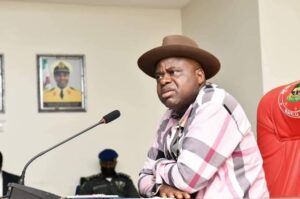
The NDC was officially registered by the Independent National Electoral Commission (INEC) on February 5, 2026, following a federal high court order. The certificate of registration was presented to the party on February 23, 2026 by the founder, former governor and the current member representing Bayelsa West Senatorial District, Senator Henry Seriake Dickson, a native of Toru-Orua community in Sagbama Local Government Area of Bayelsa State.
The NDC is historic in the sense that it is the first Nigerian political party to be singlehandedly founded by a serving Senator. The young ADC is being described by insiders as a “Noah’s Ark” for politicians seeking to escape the turbulent, litigation-ridden waters of the African Democratic Congress (ADC) and other factions.
Its promise lies in its structural integrity, offering a blank space free from the leadership tussles that often derail Nigerian opposition parties.
The party is already in top gear, having scheduled its national convention for early May 2026, and is actively wooing dissatisfied leaders across the country. The party is expected to be home to many more power seeking politicians who may be disgruntled after the forthcoming primary elections across all political parties.
The Obi-Kwankwaso Factor
The biggest catalyst for the NDC’s sudden rise to fame is the widespread rumour, now approaching confirmation, that 2023 presidential candidates Peter Obi (Labour Party) and Rabiu Kwankwaso (NNPP/ADC) are planning a mass defection to the party.
The move is propelled by a bold handwriting on the wall, adducing that former Vice President, Atiku Abubakar may have “hijacked” the ADC presidential ticket.
Sources within the Kwankwasiyya Movement confirm that consultations have been concluded, with key stakeholders endorsing a move to the NDC to avoid the deepening crises in the ADC.
The “OK Movement”: Supporters of both leaders have launched the “OK Movement” (Obi-Kwankwaso), aimed at merging the immense grassroots appeal of Kwankwaso’s Northern machinery with Peter Obi’s youth-driven “Obidient” based. Observers see the proposed move as strategic. They believe that a joint ticket under the NDC platform could provide a formidable third force capable of taking on the APC, combining structural discipline with nationwide popularity.
The Deadline Pressure: The move is largely driven by the Independent National Electoral Commission (INEC) timetable, with the NDC offering a limited window for the duo to secure an “unchallenged” presidential ticket.
According to reports, Buba Galadima, a key figure in the alliance, confirmed that negotiations are in advanced stages, with documents being signed to ensure a smooth transition to the new platform. While the ADC has attempted to play down these reports, the momentum behind the NDC suggests a major political realignment is inevitable.
If the merger between the NDC, Peter Obi, and Rabiu Kwankwaso is finalized, the 2027 presidential race may become a dramatically different, tighter contest than previously anticipated.