Cross River State Senator and Chairman of the Senate Committee on Niger Delta Development Commission NDDC, Asuquo Ekpenyong, has re-emphasized the need for the region to move from extraction to production and from raw materials to value addition.
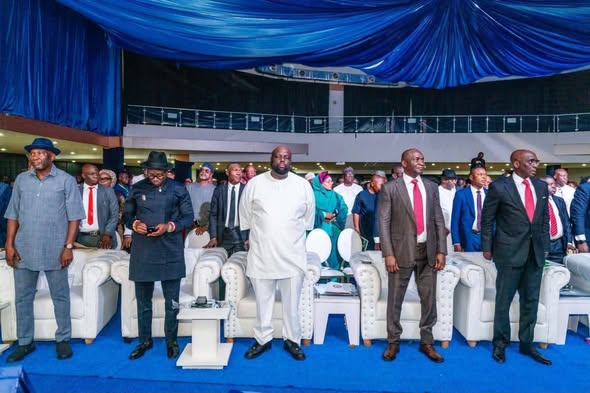
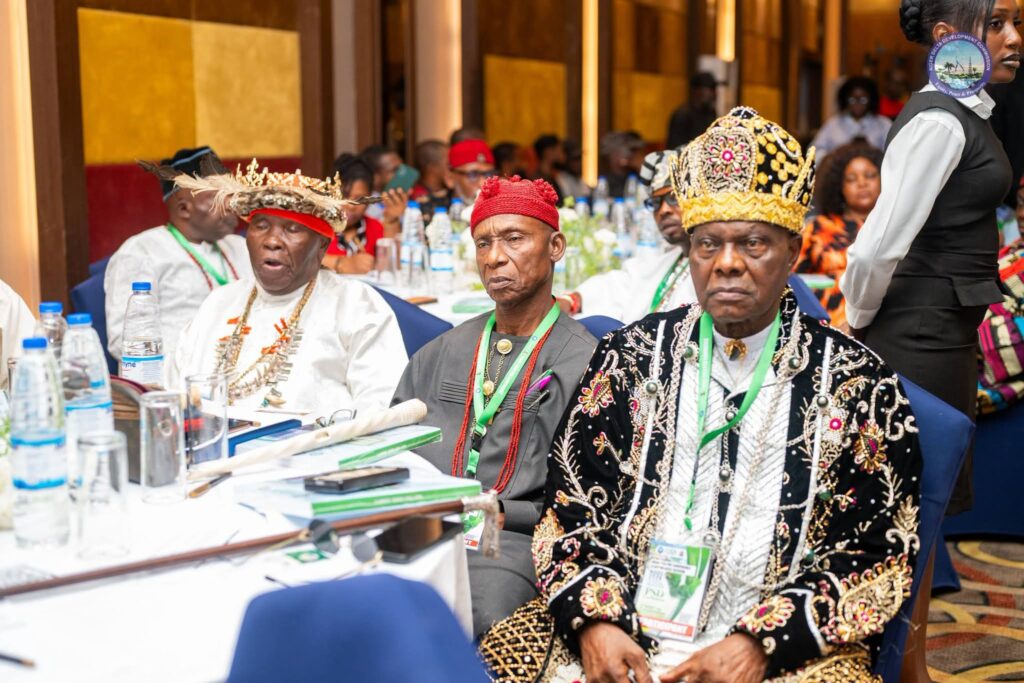
Speaking at the 2026 NDDC Partners for Sustainable Development Conference, Ekpenyong offered fresh clue on how Niger Delta can turn its vast natural resources into sustainable economic prosperity,
He also pointed to recent improvements in the naira’s exchange rate, Nigeria’s external reserves, trade balance and fiscal position.
While some Nigerians may disagree with him, Ekpenyong noted that the country’s currency; naira has strengthened significantly against the US dollar, noting that Nigeria’s external reserves have risen significantly and are now at their highest level in about 17 years.
According to him, by late August 2026, reserves were reported at over $53 billion, compared with levels below $40 billion a year earlier. The foreign exchange market, he said, has also improved significantly from the period when the naira fell to record lows, trading at about N1,900 to the dollar on the parallel market and reaching an intraday rate of about N1,851 to the dollar on the official market.
His words; “By August 2026, the official rate had strengthened to about ₦1,346 to the dollar, representing an appreciation of approximately 27.3 per cent from that official-market peak. The gap between the official and parallel markets has also narrowed
considerably. Nigeria has also recorded stronger external trade numbers. In the second quarter of 2026, the country posted a trade surplus of about ₦12.6 trillion, more than double the level recorded in the corresponding quarter of 2025.
“By way of illustration, combined allocations to states and Local Governments rose of from about ₦610.5 billion in November 2023 to more than ₦1.12 trillion in March 2026, an increase of about 85 per cent, although monthly FAAC allocations naturally fluctuate.
“This improved fiscal position has given subnational governments greater capacity to meet obligations such as prompt payment of salaries,
investments in infrastructure and expansion of public services.”
Asuquo revealed that “at the same time the reforms were being implemented, policies were introduced to cushion the pressure of the reforms. The Nigerian Education Loan Fund has significantly expanded access to higher education. By May 2026, the administration reported that more than 1.5 million students had accessed support, with over ₦282 billion disbursed. The National Minimum Wage Act systematically increased wages in response to the pressure on workers’ income.
“The Compressed Natural Gas programme is creating an alternative to petrol for commercial transport, while the new tax laws are intended to simplify tax administration, reduce duplication and create a more predictable environment for businesses and investment.”
According to him, the federal government has also expanded cash-transfer programmes for vulnerable Nigerians.
The chairman recalled that by July 2026, it reported that support had reached 15 million vulnerablehouseholds. CREDICORP is similarly expanding access to consumer credit for workers and families.
These reforms, he said, have required cooperation between the Executive and the Legislature.
He noted that under the Chairmanship of the President of the Senate, Senator Godswill Akpabio, the 10th National Assembly has played its constitutional role through legislation, appropriations and oversight.
Asuquo maintained that that is how Nigeria democracy should work. “The executive provides policy direction, while the Legislature provides the legal and fiscal framework and thereafter scrutinises implementation.
“The Niger Delta has powered Nigeria for decades. Yet our region must not
continue to be defined only by what is extracted from it. The next phase of
development must be about what we build within it. We must move from extraction to production; from raw materials to value addition; from intervention to enterprise; and from environmental degradation to resilience. In simple terms, extraction must finance transformation.
“The resources generated from our region today must help build the businesses, infrastructure, skills and institutions that will sustain prosperity tomorrow.
“This is where I believe the NDDC must continue its gradual but focused transition from project delivery to broader economic transformation, steps already being
undertaken by the present Board and Management. The NDDC, with its statutory mandate, experience and regional reach, should continue to play an important coordinating role in advancing sustainable development across the Niger Delta.
“We must ask not only what assistance an entrepreneur needs today, but what is
preventing the entire economic system around that entrepreneur from allowing him or her to succeed.
“That is where legislation, oversight, appropriations and representation become important. For the National Assembly generally, and for the Senate Committee
on NDDC in particular, our responsibility is to strengthen the legal framework where necessary, ensure that appropriations reflect strategic development priorities, scrutinise expenditure for value and impact, represent the concerns of our communities, and help bring stakeholders together.
“The current NDDC has already described its direction as a movement from
transactional to transformational development. Our responsibility is to ensure that this transformation can be seen and measured across the region.”
Wishing participants a productive engagement, Asuquo revealed that Niger Delta has spent decades powering Nigeria. “Our responsibility now is to help build a Niger Delta whose resources, people and institutions can sustain its own prosperity for generations to come.”