BY JOHN ODHE
What began as a solemn journey of solidarity ended in unimaginable sorrow on Friday, November 20, 2026, along the waterways of Southern Ijaw Local Government Area of Bayelsa State.
Scores of mourners traveling from Ayama community to Ukubie for a burial ceremony never reached their destination after their wooden passenger vessel, locally referred to as a “Love Boat” capsized at the river junction between Oweikorogha and Otuan communities.
While emergency responders, police, and brave local divers managed to rescue 55 survivors, dozens of bodies, including those of young children, have already been recovered from the River Nun, with many more feared missing.
The disaster has plunged riverine communities into deep grief, leaving families frantically scanning the shorelines for loved ones whose names were never even recorded on a passenger manifest.
This calls for concern about how porous, unchecked and unsafe the maritime transport system in Bayelsa State has been.
Preliminary investigations and harrowing eyewitness accounts point to a fatal combination of human negligence and structural failure as responsible for this national tragedy.
Survivors recounted that the plank-built barge was heavily overloaded far beyond its safe capacity, with loud music playing and passengers dancing on the upper deck before the wooden structure buckled and broke in two.
Compounding the crisis, the vessel was said to have developed a mechanical fault mid-journey. Despite desperate pleas from frightened passengers and onlookers at the Oweikorogha jetty urging the operator to dock and offload excess weight, the captain pressed onward until the boat overturned. Furthermore, the absence of life jackets turned a preventable mechanical breakdown into a mass-casualty drowning event.
This heart-wrenching incident is tragically familiar to residents of Bayelsa State and Nigeria’s broader inland waterways, where fatal boat mishaps have become a recurring nightmare.
Just weeks earlier, on November 6, 2026, two separate accidents along the Abedigbene waterways in Brass LGA and Sagbama LGA claimed the lives of a serving police officer and a female passenger.
In previous years, the state has similarly mourned devastating losses, such as the April 2023 capsizing along the Okoroma River in Nembe LGA and deadly market-boat fires in Southern Ijaw that wiped out entire livelihoods. Across Nigeria, fatalities surged by over 60 percent in the first half of 2026 alone, underscoring a systemic failure to protect riverine commuters.
Advocates of safe water travels note that boat accident of avoidable deaths requires urgent, uncompromising enforcement of maritime safety laws alongside long-term infrastructure investment.
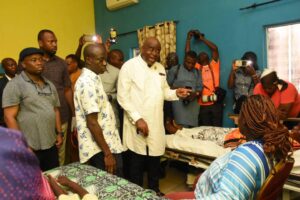
Following the tragedy, the Bayelsa state governor, Senator Douye Diri directed the ministry of Marine and Blue Economy and security agencies to establish a dedicated marine task force to strictly enforce waterway protocols.
This reactive action is not enough. Under normal circumstances, heads would have rolled in the ministry of Transport, and the ministry of marine and blue economy as well as the department of Marine Police. Also to face sanction is the leadership of the Maritime Association of Nigeria, Bayelsa State chapter.
This unfortunate accident has further exposed leadership void existing amongst the above mentioned bodies that are responsible for maritime safety. They must be made to answer questions and face the music of their careless. This is not an issue of just setting up an investigative committee. If heads do not roll to serve as a deterrent to official recklessness, this ugly occurrence will continue.
Subsequently, uthorities must mandate the compulsory use of certified life jackets for every passenger, enforce strict weight limits, ban unseaworthy makeshift plank boats, and require documented passenger manifests at every departure jetty.
Equally vital is continuous public sensitization so that commuters can feel empowered to refuse boarding overcrowded vessels, paired with intensified government efforts to construct coastal roads that offer safer alternatives to water travels.
Until strict accountability replaces lax oversight on Nigeria’s creeks and rivers, every boat departure in riverine communities will continue to carry the shadow of peril.
The victims of the Southern Ijaw mishap, mothers, fathers, and children who set out simply to pay their last respects to a neighbour, deserve more than fleeting condolences and reactive probes.
Though commendable, the approval of N250 million for the families of the victims cannot replace the pains of losing loved ones in an avoidable circumstance.
The memories of the departed must serve as the catalyst for lasting maritime reforms, ensuring that the waterways of Bayelsa State become channels of commerce and connection rather than corridors of grief.