“You cannot expect a police officer to respect the dignity of a citizen on the street when that officer’s own human dignity is routinely stripped away by his superiors,” declared Chidi Odinkalu, Human Rights Lawyer and Academic. Echoing similar sentiment, civil rights advocate Alistair Cooke once remarked, “A system that punishes its foot soldiers for surviving in a broken house while the architects live in comfort is not practicing justice; it is practising theatre.” Today, let’s reflect on how a seemingly noble enforcement of discipline can easily cross the thin line into institutional theatre and systemic hypocrisy.
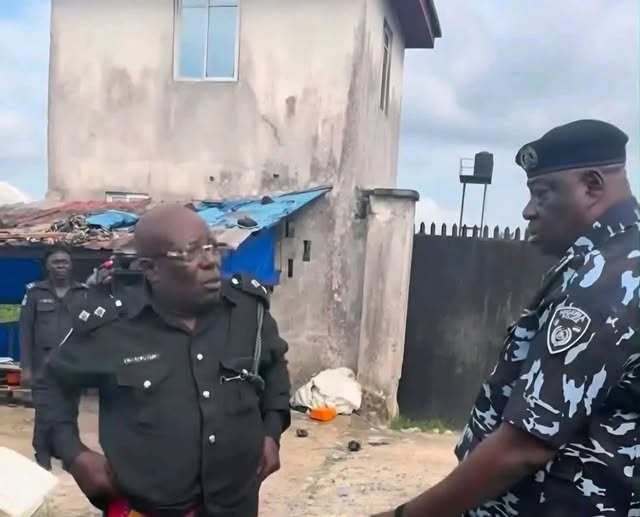
Do you know that the recent viral videos on social media showing Rivers State CP confronting and sanctioning his Oyibo subordinates for mounting unauthorized checkpoints has sparked intense national debate whether the actions represent an authentic commitment to law and order or merely an act of high-handed hypocrisy? While it is entirely proper to take action against police officers who violate a superior’s legitimate directives, a deeper concern lies in interrogating why these infractions keep occurring.
By turning a routine administrative correction into a highly choreographed media show, the commissioner provided a poor example of leadership – one that displayed intimidation rather than empathy – leaving many to wonder if his goals could not have been quietly and effectively achieved without the cameras rolling. This grandstanding successfully diverts public attention from structural deficiencies, begging critical questions regarding when the commissioner last confirmed issuance of standard uniforms to his men, or exactly how much operational funding the divisional police stations under him collect to run their daily administrations.
Very concerning too was the commissioner’s display of total lack of empathy regarding a health issue raised by one of the intercepted officers; by publicly partially undressing an adult man and exposing his underwear in the full glare of cameras, the CP seemed to consider chasing public applause more important than addressing a subordinate’s medical well-being. It raises the question of whether an internal anti-harassment policy even exists within the Nigerian Police Force, and how the leadership can realistically expect its men to treat civilians in a civil manner when the hierarchy itself is seen utilizing public humiliation, intimidation, and degradation to discipline its own.
Furthermore, the generic command to remove all roadblocks seems to fail to account for varying crime rates across different volatile terrains. In Chief Samuel Adebayo’s words, “A blanket directive issued from a comfortable office that ignores local realities is rarely about safety; it is almost always about optics.” As someone who has personally been a victim of roadblock extortion – having once been detained for hours by the roadside alongside my pregnant wife for refusing to part with money for offence we did not commit, only for the officer to recklessly hand over my original vehicle documents and driver’s license to an unknown motorist who drove away – I still recognize that when properly managed, these checkpoints serve a valuable security purpose. This realization forces many to ask the commissioner what specific communication and logistical equipment his men actually possess to perform effective road operations without relying on static barriers.
So, it’s necessary we look beyond superficial public relations exercises and demand that the police hierarchy pivot towards comprehensive, systemic follow-up actions that address possible deeper institutional rot. To achieve real change, the police command must establish independent welfare boards to investigate the specific funding gaps, uniform shortages, and lack of functional patrol tools that may hamper the effectiveness of police men on the highways. Higher management must move away from the destructive culture of viral punitive expeditions and instead implement strict, internal anti-harassment policies that mandate dignity and emotional intelligence during disciplinary proceedings.
If the top echelon of police leadership refuses to treat its subordinates as human beings worthy of respect and healthcare support, any expectation of civil policing on our roads may remain a pipe dream. Long-term security cannot be built on a foundation of theatrical intimidation; it requires the hierarchy to systematically audit divisional allocations, provide modern communication gadgets, and ensure that field operations are driven by tactical intelligence rather than arbitrary blanket bans. The leadership must intentionally build a culture of institutional empathy, ensuring that the human rights of both the officer and the civilian are equally protected under the law. We must actively support reforms that hold leaders accountable for the living and working conditions of their personnel, transforming the force from a tool of possible top-down suppression into a modern, supportive institution. True accountability cannot survive within a system that routinely abuses its lower-ranking personnel while simultaneously expecting them to display impeccable professionalism, restraint, and civility when interacting with the civilian population. While not in any way supporting the actions of the policemen who violated a superior’s instruction, the point, as Professor David Bayley noted, is that “When discipline turns into a media spectacle, it ceases to be a corrective measure and becomes an exercise in public relations at the expense of subordinate morale.”
As you step out each day, remember that true justice is structural, never performative. We must collectively look beyond the viral videos and demand a thorough investigation into the deeper welfare crises facing our security agents. Real security will only emerge when we replace the theater of intimidation with the lasting architecture of systemic reform.
*Esitikot, a chemical engineer, is a professor of occupational health and safety. He is a public affairs analyst, UN Ambassador for Peace, and a pro bono lecturer at the Institute of Health, Safety, Security and Environment, University of Uyo. He can be contacted via 08035103559 (Whatsapp only) or email (esitikot@gmail.com).