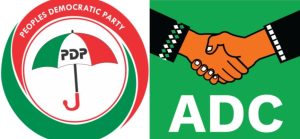
A former Delta State governor, Ifeanyi Okowa, says he now regrets accepting the Peoples Democratic Party (PDP) vice-presidential ticket in the 2023 general election alongside former Vice President, Atiku Abubakar which the duo lost even in his own state.
Okowa has since left the PDP and pitched political tent with the ruling All Progressives Congress (APC)
The immediate past governor of Delta State notes that his pair with Atiku was the one that did not reflect the political mood of his constituents at the time.
Speaking during an interview on the Arise Television Morning Show, Okowa said the choice to run on the PDP presidential ticket was taken at the national party level, but in retrospect, he believes it ran contrary to the sentiment in Delta State, where voters were reportedly less inclined to support another northern presidential candidate after the Muhammadu Buhari’s administration.
“Even when we were campaigning, I realised our people were not interested in having another northerner come into power,” he said, adding that he now considers the decision inconsistent with the expectations of his political base.
The 2023 election results in Delta State reflected a shift in voter alignment, with the Labour Party’s Peter Obi winning the state with over 341,000 votes, ahead of the PDP’s 161,600 votes, a performance widely interpreted as a rejection of the PDP presidential ticket in the South-South state.
On April 23, both Okowa and incumbent Delta State Governor Sheriff Oborevwori formally defected to the APC, marking a significant political shift in Delta State, long considered a PDP stronghold.
Meanwhile, Okowa has dismissed allegations linking him to financial misconduct, stating that he was not arrested by the Economic and Financial Crimes Commission (EFCC) but only honoured an invitation from the agency, insisting there was no wrongdoing on his part.
Reactions within the PDP have been mixed. Senator Abba Moro has previously criticised the selection of Okowa as Atiku’s running mate in 2023, describing it as a “serious mistake” and questioning his level of commitment during the campaign, suggesting that his political alignment may not have fully matched the party’s presidential ambition.
Okowa’s latest comments are being viewed in political circles as part of a broader post-election recalibration, as key actors reassess alliances and reposition ahead of the next electoral cycle.