BY JOHN ODHE
Escalating violence across Nigeria’s political campaign activities ahead of the January 2027 general elections has triggered widespread concern over the effectiveness of police investigations and a persistent lack of prosecutions.
According to a November 2026 assessment by the African Centre for Security, Governance & Development (CentreSGD), at least 70 physical election-related attacks were recorded across 19 states and the Federal Capital Territory between January 1 and October 27, 2026, resulting in 27 deaths.
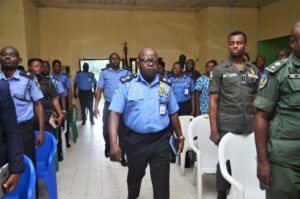
Despite repeated assurances from the police, including a November 17, 2026, statement by Force Public Relations Officer, Anietie Iniedu that over 397 arrests had been made nationwide over three months, civil society groups are worried that investigations frequently stall without yielding convictions or holding political sponsors accountable.

Several high-profile attacks on campaigners since campaigns officially began on August 19, 2026, highlight the gap between police probes and tangible legal outcomes.
On October 10, 2026, supporters of Nigeria Democratic Congress (NDC) governorship candidate Chinyeaka Ohaa were attacked during campaign activities in Enugu State, leaving one supporter dead, while an earlier September attack targeted a People’s Democratic Party (PDP) rally in the same state.
On November 12, 2026, armed men disrupted an NDC town hall meeting in Oregun, Lagos, assaulting journalists. Samuel Adebanjo of TheCable was not so lucky as the thugs descended on him and ceased his equipment.
More recently, on November 23, 2026, gunmen attacked the campaign activities of former deputy senate president, Ovie Omo-Agege in Uduere community, Delta State, killing six people even though police personnel were said to be deployed to the venue.
This was followed two days later by a shooting at an NDC rally along Airport Road in Benin city, Edo State, that wounded an attendee.
Civil society organizations and the Independent National Electoral Commission (INEC) have increasingly pointed to delays in police case-file transfers and uncompleted investigations as primary obstacles to justice.
In a letter dated November 14, 2026, the Socio-Economic Rights and Accountability Project (SERAP) gave INEC chairman, Prof. Joash Amupitan seven days to obtain investigation files from the Nigeria police force regarding at least 11 documented incidents of campaign violence, noting that zero suspects had been prosecuted three months into the campaign cycle.
A prospective voter, Mr. James Pere, who spoke to TNN in Yenagoa concerning the growing rate of election related violence leading to the 2027 general elections, said although Bayelsa has been very peaceful since the beginning of the campaigns, the police should step up their games in the security flashpoints across the country.
Speaking at an interactive session with political party leaders at Force Headquarters in Abuja on November 24, 2026, Prof. Amupitan publicly urged the police to expedite arrests, conclude investigations, and transmit completed case files so INEC could exercise its powers under Section 148 of the Electoral Act 2026, to prosecute defaulters.
The failure to conclude investigations and prosecute offenders has deepened political tensions and raised alarms among lawmakers and democracy advocates.
Following the Delta State killings, the House of Representatives adopted a motion on November 25, 2026, warning that the inability to arrest and prosecute perpetrators would encourage further bloodshed, and demanded an impartial probe into both the attackers and their financiers.
Similarly, the NDC boycotted the November 24 police security meeting in Abuja, citing the failure of law enforcement agents to protect opposition figures. It is my earnest prayer that this gale of untamed political violence does not degenerate to a state of anarchy where the opposition who have been on the receiving end so far may resort to self-help.
As the Inspector General of Police, Olatunji Disu orders fresh probes into recent attacks, observers warn that unless police investigations translate into swift courtroom prosecutions before January 2027, impunity will continue to threaten voter turnout and democratic stability.