By Tom FredFish
The condition of the Calabar-Itu Highway has, for many years, represented one of the most significant infrastructure challenges facing the South-South region. Stretching through Cross River and Akwa Ibom States, the highway is a strategic economic corridor linking communities, facilitating interstate commerce, supporting agricultural distribution, promoting tourism, and connecting millions of Nigerians.
Unfortunately, what ought to have become a symbol of federal infrastructure renewal has instead become a reminder of delayed promises and the slow pace of project execution.

On May 3, 2017, the Federal Executive Council (FEC), under the administration of President Muhammadu Buhari, approved the contract for the rehabilitation and dualisation of the Calabar-Itu Highway with a spur at Ididep. The contract, initially valued at N54 billion, generated widespread excitement among residents of Akwa Ibom and Cross River States who had endured years of hardship on the deteriorating federal road.
The expectation was that within a reasonable period, the dangerous highway would be transformed into a modern dual carriageway capable of improving transportation, reducing accidents, lowering travel time, and stimulating economic activities.
Nine years after that approval, those expectations remain largely unrealised.
Large portions of the highway remain under construction, while other sections continue to deteriorate under heavy vehicular traffic. Motorists still navigate failed portions, businesses continue to count their losses, and commuters endure unnecessary delays that have become an unfortunate part of daily travel.
For a project of such national importance, the pace of execution has been difficult to justify.
The All Progressives Congress (APC) has controlled the Federal Government since 2015 through the administrations of Presidents Muhammadu Buhari and Bola Ahmed Tinubu. With two successive administrations from the same political party overseeing the project, many Nigerians reasonably expected continuity, improved funding and timely completion.
Instead, the Calabar-Itu Highway has become one of the longest-running unfinished federal road projects in the region.
The previous government cited funding constraints, inflation, exchange rate fluctuations, contract reviews, and other economic realities as factors responsible for the delays. While these explanations deserve consideration, they cannot permanently excuse nearly a decade of incomplete work on one of Nigeria’s most strategic highways.
Infrastructure projects naturally encounter challenges. What citizens expect, however, is visible progress that reflects effective planning, consistent funding, and efficient project management.
The prolonged delay has come at enormous economic and social costs.
Commercial transport operators spend more on vehicle maintenance. Farmers struggle to move produce efficiently to urban markets. Businesses face higher logistics costs that ultimately translate into increased prices for consumers. Emergency response times are affected, while travellers continue to face avoidable risks on sections of the highway that remain in poor condition.
Infrastructure is not merely about roads; it is about economic productivity, national competitiveness and the quality of life of ordinary citizens.
For many residents of Akwa Ibom State, questions have also emerged regarding the overall federal presence in the state during the APC’s years in office. While qualified indigenes have been appointed into various federal positions, critics argue that visible federal capital projects have not been commensurate with the support of the Akwa Ibom State Government to the APC and public expectations.
The Calabar-Itu Highway remains the most prominent and arguably the most symbolic; ironically, it is also the project whose prolonged completion has attracted the greatest public concern.
In politics, perception matters. Governments are often judged less by policy statements than by tangible outcomes. Roads, bridges, hospitals, and schools are physical evidence of governance that citizens can see, use, and evaluate.
Consequently, it is unsurprising that many Nigerians increasingly assess political parties based on their record of delivering public infrastructure. Public dissatisfaction with economic conditions, rising living costs, unemployment, and delayed infrastructure has shaped political conversations across the country. As another election cycle approaches, many voters have openly expressed their intention to use their Permanent Voter Cards (PVCs) to reward performance or demand change through the democratic process.
Such sentiments are part of democratic accountability and reflect the constitutional right of citizens to evaluate governments at the ballot box.
The Calabar-Itu Highway should not become another cautionary tale of abandoned expectations. Rather, it should serve as a wake-up call to the APC government that announcing projects is only the first step; completing them is the true measure of leadership.
The APC Federal Government must urgently prioritise the completion of this highway by ensuring adequate funding, strengthening oversight, enforcing contractor accountability and establishing realistic timelines that are honoured.
The people of Akwa Ibom and Cross River States have waited long enough.
Nine years after the Federal Executive Council approved the project, Nigerians deserve more than repeated assurances. They deserve a highway that reflects the value of their taxes, protects lives, promotes economic growth, and restores confidence in the capacity of government to fulfil its promises.
History ultimately judges governments not by the number of projects they announce, but by the number they complete. On that score, the Calabar-Itu Highway with the spur at Ididep remains an unfinished chapter awaiting a successful conclusion.
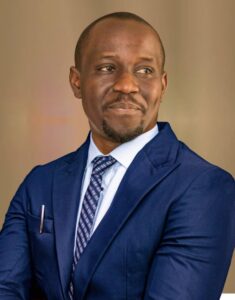
Dr. Tom FredFish is a Journalist, public affairs analyst, and political commentator