Madam Nneka Uchenna was full of life and very excited as she started counting weeks in anticipation of the arrival of a baby she had expected for years. She had refused to give up on God. For about 22 years, neighbours, family members and naysayers had mocked her for being childless.
While many called her a man in a woman’s mold, others would simply tell her to quit her marriage so that her husband, Uchenna, can bring in a woman that would give him a child. Sometimes she would cry, sometimes she would just groan as she continued to pray for a miracle.
Then the day came. She was pregnant and for nine months, she carried her shoulders high as an expectant mother. But when it was time for delivery, she got a shocker-she would be going through a Caesarian Section. Her mind skipped, especially when she and the husband were informed of the pints of blood that must be made available before the surgical operation. Of course they had no money.
Uchenna, her husband moved here and there, begging for financial assistance. The hospital had told them they had no blood in their bank. The man also went about looking for people to donate blood but found none.
By the time he was able to get help, it was too late. Nneka could not make it because of the blood she lost. So, Uchenna lost the wife, even though the baby survived. It was a sad day for a man who had waited for a child for 22 years, only for him to lose the wife, while the baby survived.
Maybe, it is experiences like this that may have invigorated the Sterling Oil Exploration and Energy Production Company Limited (SEEPCO), to take steps towards promoting the culture of voluntary blood donation, to boost blood banks. It has so far encouraged and supported the campaign for blood donation in Lagos and Delta states. The company is doing this in partnership with an NGO, the Vcare for Development Foundation, VCDF, in collaboration with the Delta State government and the Nigerian Red Cross Society.
It is part of the company’s Corporate Social Responsibility, CSR, for its host communities and has so far led to a boost in the blood bank in parts of the country.
For example, about 550 pints of blood were mobilised within two days when the exercise was held in Lagos when the awareness took place some weeks ago, in partnership with the Lagos State Blood Transfusion Service (LSBTS) and the Nigerian Red Cross.

The move by VCDF for a steady growth in annual blood drive saw a rise from 98 donors in 2022 to 147 in 2023, 268 in 2024, and 341 in 2025. The organisation’s cumulative total stood at 1,404 donors before the Delta State programme. It has earned VCDF the Blood Donation Champion Award from LSBTS.
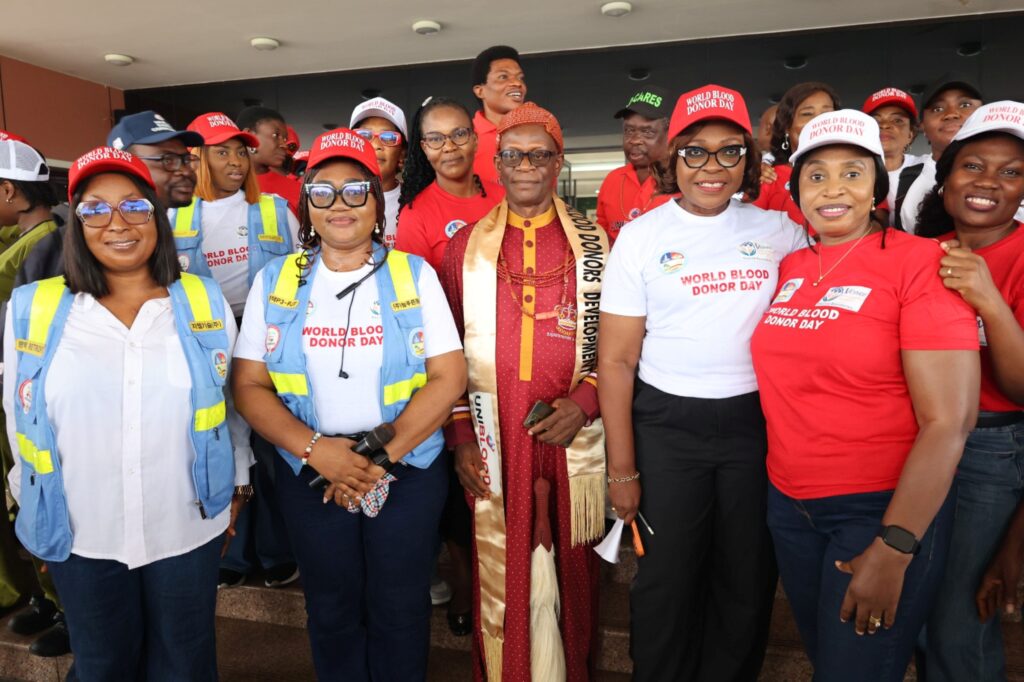
During the voluntary blood donation campaign in Delta State, SEEPCO, through Vcare and with the support of the state government, visited all the three senatorial districts-Asaba, Ugheli and Warri- to preach the gospel of voluntary blood donation, in line with the 2026 World Blood Donor Day, which theme was “One Drop of Humanity: Give Blood, Save Lives.”
Throughout the campaign, stakeholders emphasised that voluntary, regular and unpaid blood donation remained the most sustainable way to maintain an adequate blood supply for healthcare facilities and save lives.
At the Central Hospital Ughelli, the hospital’s blood transfusion committee and management commended SEEPCO, Vcare, the Delta State Ministry of Health and supporting partners for their contributions
In a goodwill message, the Delta State Commissioner for Health, Dr. Joseph Onojaeme said “voluntary blood donation is important for public health emergencies and to save lives during accidents and childbirth. We are deeply grateful to VCDF and partners for the commitment to promote voluntary blood donation and support life-saving healthcare initiatives.”
Participants reported increased awareness among community members, while many first-time donors expressed willingness to become regular donors after receiving information about the safety, benefits and impact of blood donation.
Perhaps, if the consciousness of voluntary blood donation had been high, as is being currently pushed by SEEPCO, and if the hospital had got blood freely and willingly donated for use by people in distress like Nneka, the woman would still have been alive today. But she died.