Bayelsa State governor, Senator Douye Diri has expressed joy, that the fight against drugs and other criminal activities in his state, with the partnership of the United Nations Office on Drugs and Crime is yielding fruits.
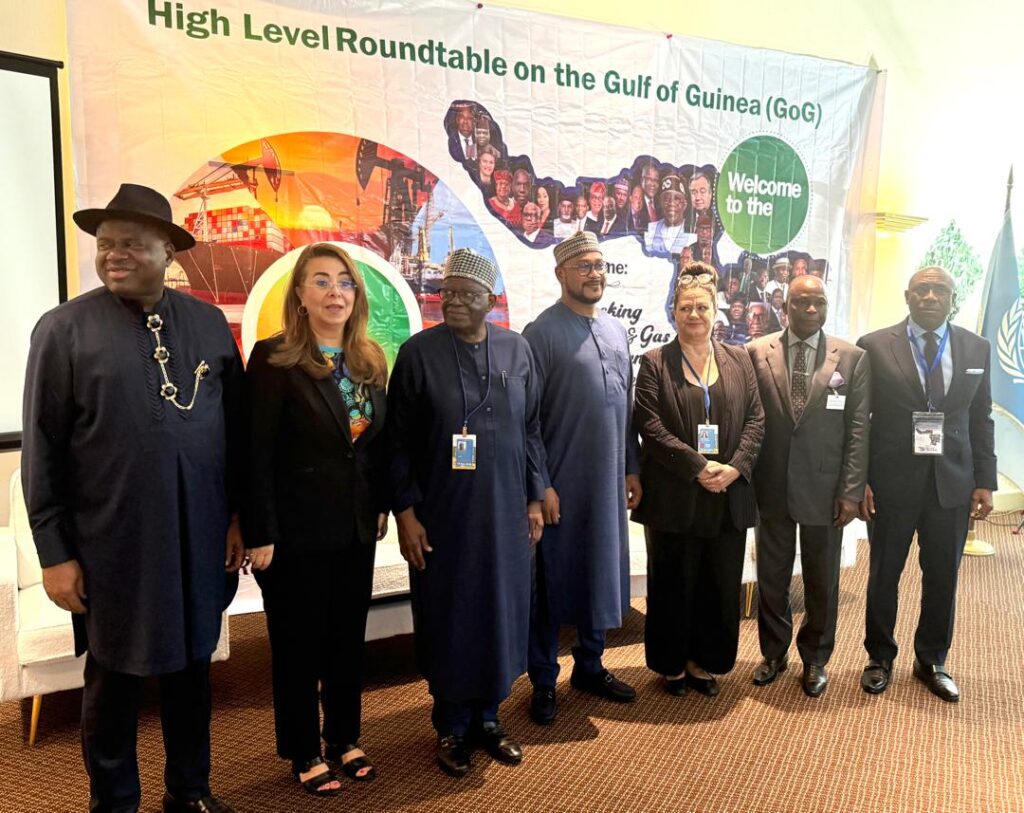
Diri has also said that the location of the state around the resource-rich Gulf of Guinea (GoG) region presents unique opportunities for investment, its growth and development.
But even with the results from the collaboration, the governor has spoken of the readiness of his government to deepen the relationship to enhance the security of the contiguous maritime area.
Diri spoke at the Nigerian Mission House in New York during a High-Level Discourse on the Gulf of Guinea, with the theme: “Unlocking Energy, Oil/Gas, Mineral Resources, Aviation and Maritime Opportunities in the Gulf of Guinea: A Roadmap for Peace and Security” on the sidelines of the 80th United Nations General Assembly (UNGA).
“Bayelsa State’s partnership with United Nations Office on Drugs and Crime (UNODC) and the government of Government of Germany to launch a community-based crime-prevention programme has shown promising results, including the rescue of seven kidnapped victims in 2022,” Diri stated.
The event was convened by a policy think tank, The New Diplomat, in collaboration with Angola-based Gulf of Guinea Commission. Diri noted that Bayelsa, being the ancestral homeland of the Ijaw people, shares historical affiliation and geographical similarities with the Gulf of Guinea.
He said the huge economic potentialities of the area were yet to be fully exploited, adding that Bayelsa’s longest coastline in the country of over 200km offers opportunities in tourism, oil, gas and energy development as well as investments in glass, ceramics, fisheries, maritime and aviation among others.
His words: “The Gulf of Guinea, stretching approximately 6,000 kilometers from Cape Lopez in Gabon to Cape Palmas in Liberia, is one of the world’s most strategic maritime basins. It anchors nearly 60 per cent of Africa’s oil production, holds 4.5 per cent of global proven oil reserves and 2.7 per cent of global gas, and supports seaborne trade expanding at unprecedented pace.


“Surrounding this basin is a vast market of over 500 million people across West and Central Africa, making the Gulf not only a lifeline for energy but also a growth engine for trade, jobs, and food security.
“Bayelsa’s unique geography grants us unmatched prospects for oil and gas exports, maritime logistics, fisheries, and coastal trade. Our dual identity as an energy powerhouse and custodian of delicate ecosystems defines both our responsibilities and opportunities.”
He stressed that the objective of his administration was to create a safe and transparent environment where private investment, local enterprise and international partners can deliver shared prosperity for communities in the region.

Diri, however, noted that insecurity had been a serious challenge in the Gulf, particularly piracy, which he said required concerted effort among stakeholders to effectively tackle.
“As a government, we have pioneered a community-based crime prevention strategy – the first among Nigeria’s coastal states. We couple this with formal enforcement in partnership with the Nigerian Navy, Joint Task Force, Police and other agencies.
“We have re‑tooled local security outfits, established the Bayelsa Community Safety Corps and deployed technological surveillance mechanisms.
The UNODC Executive Director and Director-General of the United Nations Office in Vienna, Austria, Amb. Ghada Waly, said the Gulf of Guinea is an important economic powerhouse of the African continent.
Waly re-echoed the significance of shoring up security in the Gulf as the region had become a transit route for illicit financial flows, drugs and organised crime.
She said: “According to the 2024 Nigerian Corruption Survey reported by the UNODC, over $40 billion had been lost in the last one decade through illicit financial flows and embezzlement. Corruption opens the door for criminal networks to infiltrate supply chain and erode the rule of law.
“With global demand for critical minerals set to rise, the risks will only grow. Without concrete action and sustained support, these threats will hold the region back from reaching its full potential. At the UNODC, we are working with our partners to curb organised crime in Nigeria and in the Gulf of Guinea.”
In a welcome address, Nigeria’s former Ambassador to Thailand, who is the convener and Director of The New Diplomat, Oma Djebah, said the roundtable was organised to bring together global thought leaders, policy makers, private sector icons and the civil society “to advance pragmatic, enduring partnerships and a bright future for the Gulf of Guinea.”
He also stated that the proposed Gulf of Guinea Business Council (GoGBC) would foster collaboration between the private sector and governments in the Gulf of Guinea and development partners just as it would create jobs, improve infrastructure and unlock the region’s full economic potential.
The event was chaired by former Nigeria’s Foreign Affairs Minister and erstwhile United Nations Under-Secretary-General, Prof Ibrahim Gambari, and had in attendance Governor of Zamfara State, Dr. Dauda Lawal, Nigeria’s Attorney-General and Minister of Justice, Mr. Lateef Fagbemi, SAN, his Solid Minerals Development counterpart, Dr Dele Alake, and Nigeria’s 21st Chief of the Naval Staff, Admiral Awwal Gambo.